An implant-free, minimally invasive approach to glaucoma surgery from Professor Dan Lindfield at Farnham Eye Care.
For many people, the answer is yes.
Whilst eye drops remain an excellent treatment for glaucoma, they are not perfect. They need to be remembered every day, they can cause sore or irritated eyes and, over many years, they can affect the delicate surface tissues of the eye. Some patients simply struggle to keep their eye pressure low enough despite using several different medications.
The exciting news is that glaucoma surgery has changed enormously over the last decade.
Traditionally, glaucoma surgery involved operations such as trabeculectomy or tube surgery. These remain excellent procedures and are still the right choice for many patients with advanced glaucoma, but they are major operations with longer recovery times and a greater risk of complications.
Today, we have more options.
ELIOS™ (Excimer Laser Trabeculostomy) is part of a new generation of procedures known as minimally invasive glaucoma surgery (MIGS). Rather than creating an artificial drainage pathway or leaving a permanent implant inside the eye, ELIOS works by restoring the eye’s own natural drainage system using an extraordinarily precise excimer laser.
That simple idea is one of the reasons I became interested in the technology. Instead of bypassing nature, ELIOS aims to help the eye work as it was originally designed.
At Farnham Eye Care, we have always believed that the best treatment is not necessarily the biggest operation; it is the one that achieves the right result with the least disruption to the eye. ELIOS fits beautifully with that philosophy.

.jpg)
When considering any glaucoma procedure, the technology is only one part of the story. The experience of the surgeon, careful patient selection and long-term follow-up are equally important.
Professor Dan Lindfield helped introduce ELIOS to the United Kingdom in 2023, becoming one of the first surgeons in the country to adopt the technology. Since then, it has become an important part of his glaucoma practice, and he has now performed more ELIOS procedures than any other surgeon in the UK (over 250 cases as of June 2026).
Beyond treating patients, Dan has been fortunate to help educate other ophthalmologists around the world on excimer laser trabeculostomy (ELT) and ELIOS. His techniques and results have been presented at national and international meetings. Dan has chaired and spoken on educational webinars and podcasts and discussed the technique alongside many of the world’s leading glaucoma surgeons.

To understand why ELIOS works, it helps to understand what glaucoma actually is.
Glaucoma is one of the leading causes of irreversible blindness worldwide. It damages the optic nerve, the cable connecting your eye to your brain, which is responsible for carrying all the visual information that allows you to see.
The damage usually occurs because the pressure inside the eye becomes higher than that particular optic nerve can tolerate.
Interestingly, there is not one “normal” eye pressure. Some people develop glaucoma with pressures in the low teens. Others tolerate pressures in the mid-twenties without developing damage.
That is why glaucoma treatment is so individual. The aim is not simply to achieve a “normal” pressure. The aim is to achieve your target pressure: the pressure at which your optic nerve is most likely to remain healthy for the rest of your life.
Your eye is constantly producing a clear fluid called aqueous humour. Despite the name, it has nothing to do with tears. This fluid is made continuously inside the eye to nourish important structures such as the cornea and lens.
As new fluid is produced, an equal amount should leave the eye through a microscopic drainage system situated where the cornea meets the iris: the angle of the eye. The most important part of this drainage system is called the trabecular meshwork.
You can think of it as an incredibly fine biological filter. In most patients with primary open-angle glaucoma, this filter gradually becomes more resistant to fluid leaving the eye.
Imagine pouring water through a kitchen sieve that slowly becomes clogged over many years. The tap continues running at exactly the same speed. Less water escapes. Eventually, the level rises.
Exactly the same thing happens inside the eye. The eye usually continues producing fluid perfectly normally. The problem is not making the fluid; the problem is getting rid of it.
That is why almost every glaucoma treatment, whether drops, laser or surgery, tries to improve drainage in one way or another.
This is where ELIOS is beautifully elegant.
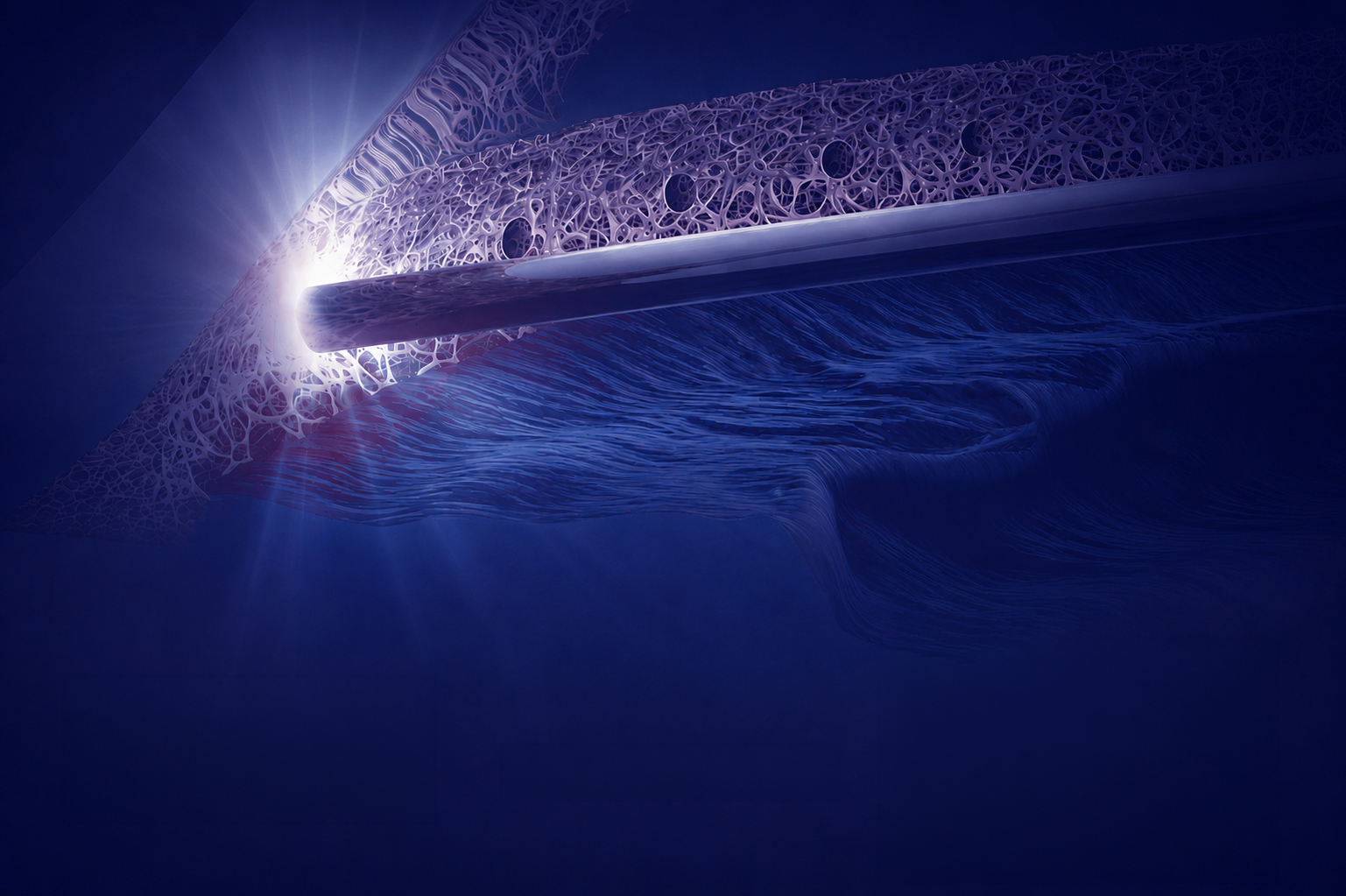
Rather than placing a tiny tube or stent inside the eye, ELIOS uses an excimer laser to create several microscopic drainage channels through the trabecular meshwork. These openings are only around 200 microns across, roughly twice the thickness of a human hair.
The laser energy is delivered through a hair-fine fibre-optic probe under direct microscopic visualisation using specialised gonioscopy equipment. Each pulse lasts only a fraction of a second.
No tissue is cut away. No implant is inserted. No heat is generated.
Instead, the laser gently creates tiny openings that reconnect the natural drainage pathway with Schlemm’s canal, allowing aqueous humour to flow more freely again.
It is an elegant piece of engineering, but more importantly, it is an elegant biological solution. Rather than bypassing the eye’s plumbing, we are helping to restore it. And that, for us, is one of the most exciting aspects of the procedure.
When patients first hear the words “laser glaucoma surgery”, they often imagine a beam of light treating the eye from the outside. ELIOS is actually something very different.
The procedure is performed from within the eye, using the same tiny keyhole incision that is commonly used during modern cataract surgery. Through this incision, I gently introduce a fine fibre-optic probe, no thicker than a strand of spaghetti, which delivers precisely controlled pulses of excimer laser energy.
Using a special microscope lens called a gonioscopy lens, I can see the eye’s drainage angle in remarkable detail. This allows me to position the laser exactly where it is needed.
The laser then creates a series of microscopic channels through the trabecular meshwork, the thin layer of tissue that offers the greatest resistance to fluid leaving the eye.
Each opening is incredibly small, around 200 microns in diameter. Individually, they are almost invisible, but together they can make a meaningful difference to how efficiently fluid drains from the eye.
One of the things I enjoy most about performing ELIOS is its precision. There is something very satisfying about seeing the natural drainage system being restored rather than replaced.
Patients often ask why ELIOS uses an excimer laser rather than the more familiar YAG or diode lasers used elsewhere in ophthalmology.
The answer lies in the way excimer lasers interact with tissue. Most lasers work by generating heat. Heat can be extremely useful in many situations, but it inevitably causes a degree of collateral damage to surrounding tissue.
Excimer lasers work differently. Rather than burning tissue, they break molecular bonds with extraordinary precision. The process is sometimes described as photoablation. Tissue is removed one microscopic layer at a time with virtually no thermal injury to the surrounding structures.
Excimer lasers have been used safely in ophthalmology for decades, most famously in laser vision correction such as LASIK and PRK. ELIOS harnesses this same precision for glaucoma surgery.

That means:
It is one of the reasons the procedure has demonstrated such an excellent safety profile in published studies.
One of my guiding principles as a glaucoma surgeon is simple:
“Whenever possible, I prefer to restore normal physiology rather than replace it.”
– Professor Dan Lindfield, Farnham Eye Care
That does not mean every patient should have ELIOS. There are many situations where procedures such as trabeculectomy, PreserFlo™, Xen®, tube surgery or cyclophotocoagulation are entirely appropriate, and I perform those procedures when they are the best option.
However, for carefully selected patients with mild to moderate open-angle glaucoma, ELIOS offers something rather elegant. Instead of creating an entirely new drainage route, we are simply helping the eye use the drainage system it already has.
I often explain it to patients like this. Imagine your house has perfectly good plumbing, but the plughole has gradually become partially blocked over many years. One solution would be to install completely new pipework. Another would be to unblock the existing drain.
ELIOS is much closer to the second approach. By improving access to the eye’s natural drainage channels, we can often lower eye pressure while leaving the rest of the eye largely untouched.
Many modern minimally invasive glaucoma procedures use tiny implants or stents, for example iStent or Hydrus.
These are excellent devices and have helped thousands of patients around the world. I regularly discuss them with patients when they are appropriate, and have implanted over 200 iStents and used Hydrus previously.
ELIOS takes a different approach. Nothing is left behind. Once the laser treatment has been completed, the probe is removed and there is no implant remaining inside the eye.
For many patients, this is an attractive concept. It also means that if glaucoma progresses many years later, all future treatment options remain available. We have not “burnt any bridges”.
That flexibility is particularly valuable because glaucoma is a lifelong condition. Many patients diagnosed in their fifties or sixties may live for another thirty or forty years. During that time, treatments will continue to evolve. Where possible, I like to preserve as many future options as I can.
One of the questions I am often asked is: “Which is the best glaucoma operation?”
The honest answer is that there is not one.
Every glaucoma procedure involves balancing three things:
Someone with advanced glaucoma and rapidly deteriorating vision may need a more powerful operation such as a trabeculectomy. Someone with early glaucoma who is undergoing cataract surgery may benefit enormously from adding ELIOS at the same sitting. Another patient may be better suited to selective laser trabeculoplasty (SLT), medication or simply careful monitoring.
The skill lies not in performing one operation exceptionally well, but in understanding which operation is right for which patient. That is why every consultation at Farnham Eye Care begins with listening.
What are your goals? Are eye drops causing irritation? Is your pressure creeping upwards despite treatment? Are you hoping to reduce medication? Are you already planning cataract surgery?
Only once we understand the whole picture do we decide whether ELIOS is likely to offer meaningful benefit.

One of the most exciting developments in glaucoma care over the past decade has been the recognition that we do not always have to think of cataracts and glaucoma as separate problems. Many patients have both conditions.
As we get older, cataracts become increasingly common. At the same time, the risk of developing glaucoma also increases. Traditionally, these conditions were treated independently. You might undergo cataract surgery one year and glaucoma surgery several years later.
Modern minimally invasive glaucoma surgery has changed that thinking. ELIOS can be performed through the very same tiny incision used for cataract surgery, adding only a few minutes to the overall procedure.
From a patient’s perspective, that means one operation, one recovery period and one opportunity to improve both vision and eye pressure.
I often tell patients that it simply makes sense. If we are already inside the eye to remove a cataract, and we know that glaucoma also needs treating, why not address both conditions during the same procedure if it is safe and appropriate to do so?
For many people, it is an elegant solution. Not everyone is suitable, of course, but when the circumstances are right, combining cataract surgery with ELIOS can be one of the most satisfying operations that we perform.
“One of the things I enjoy most about ELIOS is its simplicity. We are not trying to outsmart the eye; we are simply helping its own drainage system work more effectively. That philosophy of preserving normal anatomy while lowering eye pressure is one of the reasons I have been so enthusiastic about the technology since first introducing it into my practice.”
One of the biggest surprises for many patients is just how straightforward ELIOS surgery can be.
Whether ELIOS is being performed on its own or alongside cataract surgery, the procedure is usually carried out as a day-case operation. It adds about three minutes to routine cataract surgery but can also be performed standalone, without cataract surgery.
The operation itself is normally performed using local anaesthetic eye drops without the need for an injection. Oral sedation (tablets of diazepam) is offered if you feel nervous, too. Most patients remain awake throughout, although you will not be able to see exactly what is happening. You may notice bright lights, colours or movement, but the procedure should not be painful.
If ELIOS is combined with cataract surgery, the cataract is removed first. Once the new lens implant is in position, I gently rotate the microscope and use a special gonioscopy lens to view the drainage angle of the eye. Through the same tiny incision already used for the cataract operation, the ELIOS probe is introduced and a series of microscopic laser channels are created in the trabecular meshwork.
From the patient’s perspective, there is very little difference between having cataract surgery alone and cataract surgery combined with ELIOS. That is one of the reasons I think the two procedures complement each other so beautifully.
Recovery following ELIOS is generally very similar to recovery after routine cataract surgery.
Most patients notice mild grittiness or slight blurring of vision for the first day or two. Some experience a small amount of blood reflux inside the eye: a tiny collection of blood called a microhyphaema.
Whilst that can sound alarming, it is actually an expected consequence of reconnecting the eye to its natural drainage system and usually settles by itself over the following days. In fact, seeing a small amount of blood reflux during surgery often reassures me that the newly created channels are communicating with Schlemm’s canal as intended.
Patients are usually back to reading, watching television and enjoying gentle daily activities within a day or two. Driving depends mainly on vision, particularly if cataract surgery has been performed at the same time, and I advise each patient individually when it is safe to return to driving.
As with all glaucoma procedures, we continue to monitor eye pressure carefully over the following weeks and months. Glaucoma is a lifelong condition, and successful treatment depends not only on a good operation but also on careful follow-up.
One of the advantages of being treated at Farnham Eye Care is that your surgery and your long-term glaucoma care remain under the same specialist team. That continuity is something our patients consistently tell us they value.
This is probably the question I hear more than any other.
The honest answer is: maybe.
One of the aims of ELIOS is to reduce the number of glaucoma medications that patients require, but no responsible surgeon should promise that every patient will be able to stop their drops completely. Glaucoma is simply too variable for guarantees.
What we can say is that published clinical studies have consistently shown meaningful reductions in both eye pressure and the number of glaucoma medications required after ELIOS. Several studies have reported that around three-quarters to four-fifths of patients undergoing combined cataract surgery and ELIOS were medication-free at one year, while maintaining lower intraocular pressure.
For some people, reducing from three drops to one makes everyday life considerably easier. For others, stopping medication altogether can improve comfort, reduce redness and simplify their routine. Even if drops are still needed, they often work more effectively because the pressure has already been lowered surgically.
When I discuss ELIOS with patients, I always explain that our primary goal is not simply to eliminate eye drops. Our goal is to protect vision for life. If we can also reduce medication along the way, that is an added benefit.
One of the reasons I was keen to introduce ELIOS into my practice was the growing body of published evidence supporting the procedure.
Unlike many newer technologies that enter clinical practice with limited data, excimer laser trabeculostomy has been studied for many years and continues to accumulate long-term follow-up. The published literature demonstrates several consistent findings.
Most studies report a reduction in intraocular pressure of approximately 20–40% from baseline, together with a reduction in glaucoma medication. Importantly, these improvements have been shown to persist over several years in many patients.
Long-term follow-up extending to eight years has demonstrated sustained pressure reduction, continued reduction in medication burden and remarkably low rates of subsequent filtering surgery.
More recent real-world studies have continued to strengthen the evidence. In one published series of combined cataract surgery and ELIOS, over 78% of patients required no glaucoma medication at one year, while maintaining significantly lower eye pressure.
Perhaps most importantly, these results have been achieved alongside an excellent safety profile.
Whenever I recommend surgery, my first consideration is never “How much can we lower the pressure?” It is always: “Can we do this safely?”
Glaucoma is a chronic disease. Most of my patients have many decades of life ahead of them. Protecting vision is not about making one dramatic intervention; it is about making thoughtful decisions that continue to benefit the eye many years into the future.
One of the reasons ELIOS has become an important part of my practice is that it aligns closely with this philosophy. The procedure is minimally invasive. The conjunctiva, the delicate tissue on the surface of the eye, is left untouched. This means that if more intensive glaucoma surgery is ever required in the future, options such as trabeculectomy or tube surgery remain available.
There is no permanent implant. There is no thermal damage from the laser. The natural anatomy of the eye is largely preserved.
No glaucoma procedure is completely without risk, and it is important to be open about that. Temporary bleeding within the eye, short-term rises in eye pressure and inflammation can occur, although serious complications have been uncommon in published studies.
For me, that balance between effectiveness and safety is one of the defining strengths of ELIOS.
When I first started using ELIOS in the UK, what struck me was not just the technology; it was how logical it felt.
Throughout my career, I have been fascinated by procedures that work with the eye rather than against it. The more we can preserve normal anatomy, minimise disruption and keep future treatment options open, the better.
That is one of the reasons I have continued to teach ELIOS internationally and why it has become an important part of my glaucoma practice at Farnham Eye Care.

Every patient I see is different. Some will benefit from laser treatment, some from medication, some from traditional glaucoma surgery and some from ELIOS. My role is not to recommend one operation to everyone; it is to recommend the operation that gives you the best chance of protecting your sight for the rest of your life.
Postoperative IOP Medication Strategies with Trabecular Meshwork MIGS (PDF)