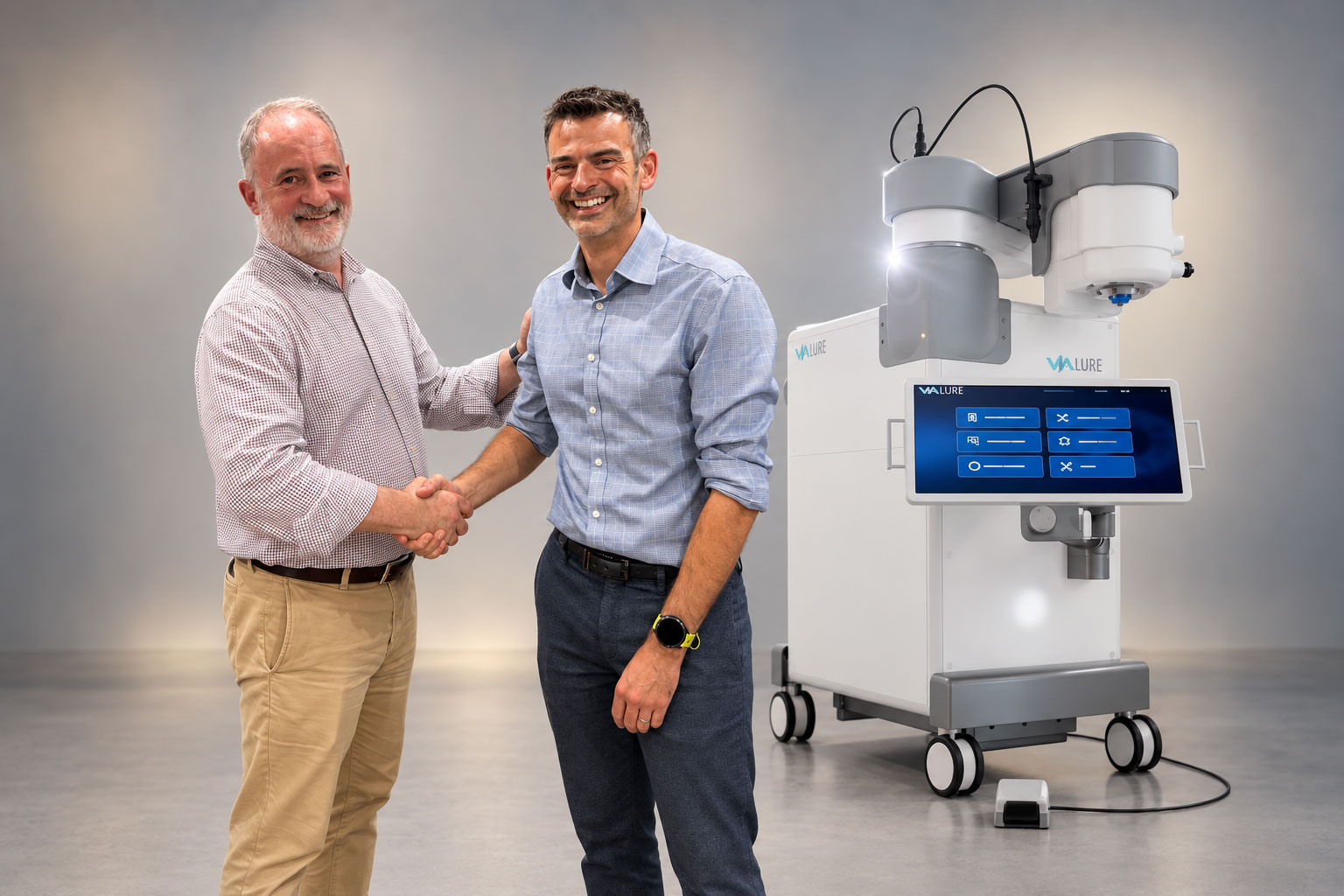
Professor Dan Lindfield is now able to offer FLigHT, a new non-incisional laser treatment for selected patients with open-angle glaucoma and ocular hypertension.
Professor Dan Lindfield has recently become one of a small number of surgeons trained to perform FLigHT glaucoma treatment, using the ViaLase laser system.
Having performed his first FLigHT procedure in September 2026, Professor Lindfield can now offer the treatment to further patients whose glaucoma and eye anatomy meet the appropriate clinical criteria.
FLigHT stands for Femtosecond Laser, Image-Guided, High-Precision Trabeculotomy. It uses highly precise laser energy to create microscopic channels through the eye’s natural drainage tissue, helping fluid leave the eye more easily and reducing intraocular pressure.
For suitable patients, this offers a new approach to lowering eye pressure without a surgical incision or permanent implant.
FLigHT is a laser treatment for selected patients with open-angle glaucoma or raised eye pressure.
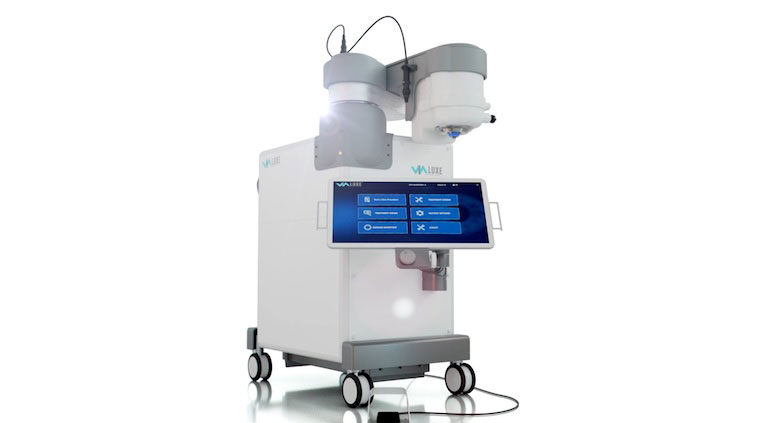
The treatment is performed using the ViaLase laser system, which combines image guidance with femtosecond laser technology.
Femtosecond lasers deliver extremely short, precise pulses of laser energy. Similar technology has been widely used in other areas of ophthalmology, including laser vision correction.
With FLigHT, the laser is used to create microscopic channels through the trabecular meshwork, which is part of the eye’s natural drainage system.
These channels are intended to allow aqueous fluid to pass more easily into the eye’s existing drainage pathway, helping to lower intraocular pressure.
One of the distinctive features of FLigHT is that it is non-incisional.
Unlike conventional glaucoma surgery, the treatment does not require the surgeon to make an incision into the eye.
FLigHT also differs from minimally invasive glaucoma surgery (MIGS) procedures that involve placing an implant inside the eye.
There is:
Because the eye is not opened to the outside environment, FLigHT avoids the route through which serious intraocular infection can occur following incisional eye surgery.
It is performed as a standalone treatment and is designed to provide meaningful pressure reduction without conventional intraocular surgery.
FLigHT treatment takes approximately four minutes per eye.
Where clinically appropriate, both eyes can be treated on the same day.
The procedure is considerably different from a traditional glaucoma operation and does not involve placing a stent or other permanent device inside the eye.
Selective Laser Trabeculoplasty (SLT) is an established laser treatment for open-angle glaucoma and ocular hypertension.
SLT works by stimulating the existing drainage tissue to function more effectively.
FLigHT works differently.
Rather than stimulating the trabecular meshwork, FLigHT creates precise microscopic channels through the drainage tissue.
According to the early clinical experience available so far, these channels do not appear to close or heal over in the same way as some treatment effects may diminish over time.
This means FLigHT may offer the potential for a larger and more durable reduction in eye pressure than SLT in appropriately selected patients.
However, FLigHT remains a new treatment and direct long-term comparative evidence with SLT is still developing.
SLT also remains an important and highly established treatment for many patients with glaucoma or ocular hypertension.
MIGS (minimally invasive glaucoma surgery) includes several procedures designed to improve drainage from the eye while being less invasive than traditional glaucoma operations.
Some MIGS procedures, such as iStent, involve placing a permanent implant inside the eye.
FLigHT is different because it is:
This gives FLigHT a distinct place within the expanding range of modern glaucoma treatment options.
There is no single treatment that is right for every patient. The most appropriate choice depends on factors including the type and severity of glaucoma, eye anatomy, previous treatment, current medication and the target eye pressure.
FLigHT is a new and emerging glaucoma treatment.
It is CE-marked, and early published results have been encouraging, with a reassuring safety profile and meaningful reductions in intraocular pressure and/or glaucoma medication use.
However, it is important not to overstate what is currently known.
Five-year and longer-term results, together with wider international experience, will be important in establishing the ultimate role of FLigHT within glaucoma care.
For that reason, careful patient selection remains essential.
FLigHT may be considered for selected patients with open-angle glaucoma or ocular hypertension whose anatomy and clinical circumstances make the procedure appropriate.
A full glaucoma assessment is necessary before treatment.
This may include review of:
Professor Lindfield can then discuss whether FLigHT, SLT, MIGS, medication or another glaucoma treatment is the most appropriate option.
Professor Dan Lindfield is a Consultant Ophthalmologist specialising in glaucoma and cataract surgery.
He became one of a small number of surgeons trained to perform FLigHT and carried out his first procedure in September 2026. At the time of writing there are fewer than 10 surgeons trained and able to perform this procedure across the world.
Introducing FLigHT adds another option to the range of glaucoma treatments available to suitable Farnham Eye Care patients, alongside treatments including SLT and minimally invasive glaucoma surgery.
However, whilst being one of the first in the world to offer FLigHT, “being first” is not our reason to offer it. We believe the treatment offers something new and promising due to its unique mode of action, very low safety profile and rapid recovery time. It allows Farnham Eye Care the option to tailor glaucoma care individually to all of our patients. Having extra options further strengthens Farnham Eye Care’s ability to offer the best possible glaucoma care and patient experience.
FLigHT procedures are performed personally by Professor Dan Lindfield.
At present, treatment takes place in central London in partnership with Centre for Sight.
There are currently only four FLigHT systems available in Europe, so patients who are suitable for treatment will presently need to travel to London for the procedure.
Farnham Eye Care apologises for the need to travel while access to the technology remains limited.
At the time of writing, the treatment cost is £4,500 per eye.
If you have glaucoma or ocular hypertension and would like to understand whether FLigHT or another treatment might be appropriate, the first step is a detailed glaucoma assessment.
Professor Lindfield can review your glaucoma, current treatment, eye anatomy and target pressure before discussing the available options.
Contact Farnham Eye Care to arrange a glaucoma consultation and discuss your treatment options.