-Side-Image-(1500px).jpg)
For people living with glaucoma or ocular hypertension, controlling eye pressure is an important part of protecting long-term vision. Eye drops and laser treatments can be highly effective, but they are not the right solution for everyone.
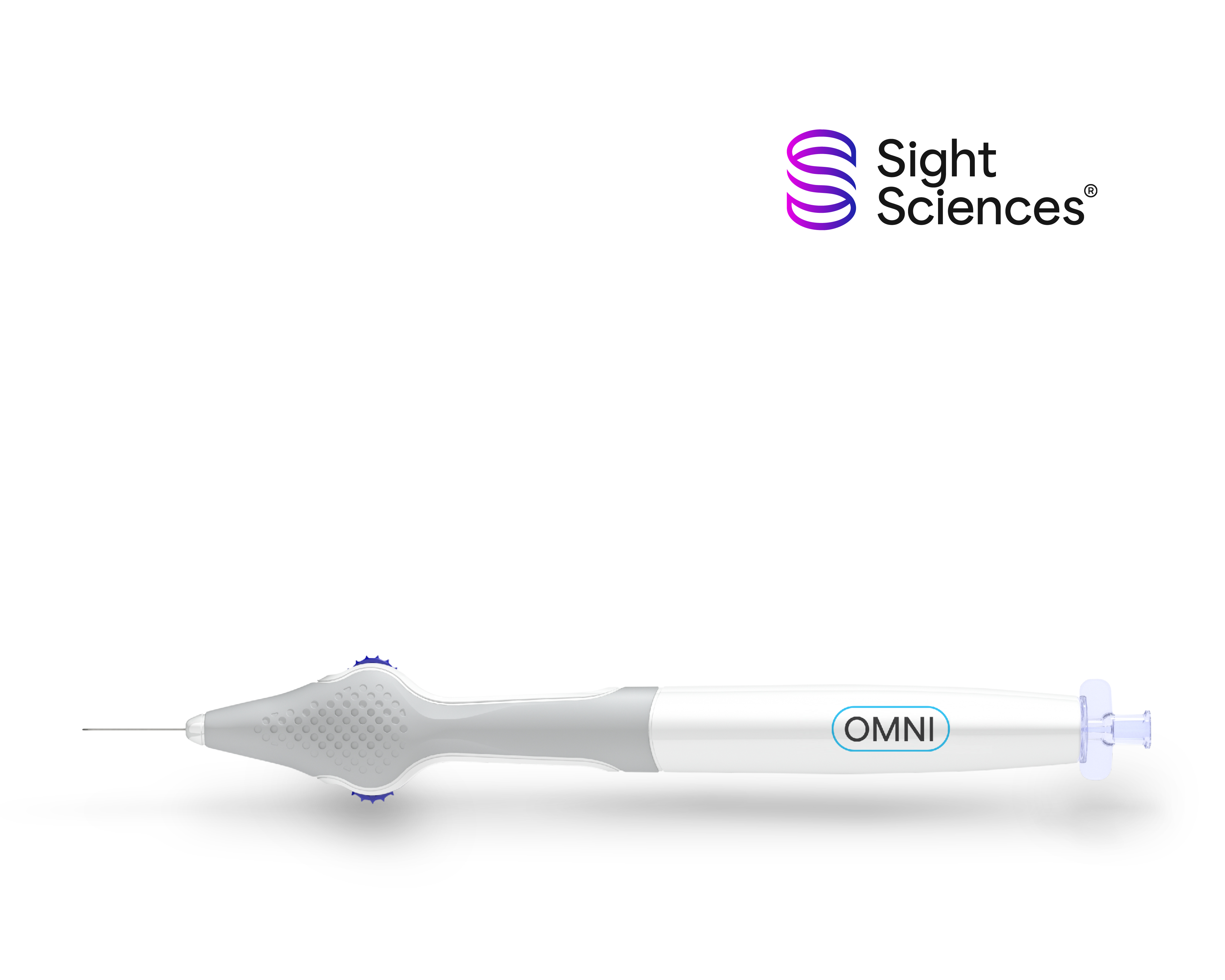
Modern glaucoma surgery now offers a wider range of options. One of these is OMNI® glaucoma surgery, a minimally invasive glaucoma surgery (MIGS) procedure designed to improve the eye's natural drainage system and reduce intraocular pressure (IOP).
Professor Dan Lindfield at Farnham Eye Care was the first surgeon in the UK to perform OMNI surgery in the UK in 2020. Since then, he has performed more than 200 OMNI procedures and has been involved in teaching and developing the technique.
OMNI is a MIGS procedure used to reduce eye pressure in suitable patients with open-angle glaucoma.
Unlike some glaucoma operations, OMNI does not require a permanent implant to be left inside the eye. Instead, it works through the eye's existing drainage pathway.
The procedure uses a very small incision and a specialised microcatheter to access the natural drainage system of the eye. This can allow the surgeon to:
The OMNI system can be used during cataract surgery or, in appropriately selected patients, as a standalone glaucoma procedure.
The eye constantly produces a clear fluid called aqueous humour. This fluid normally circulates through the front of the eye before draining through a network of tissues and channels.
In open-angle glaucoma, the drainage system does not work efficiently enough. Fluid can therefore build up, causing pressure inside the eye to rise.
Over time, raised eye pressure can damage the optic nerve, which carries visual information from the eye to the brain.
The important point is that glaucoma can progress without causing obvious symptoms. Treatment is therefore aimed at controlling eye pressure and protecting the optic nerve before irreversible sight loss occurs.
I often explain OMNI to patients using a simple plumbing analogy.
Imagine that your house has perfectly good plumbing, but the existing drainage system has gradually become restricted. Rather than immediately installing completely new pipework, another approach is to improve the existing drainage system.
OMNI takes a similar approach inside the eye.
A tiny catheter is introduced through a small corneal incision and guided into the eye's natural drainage pathway. The surgeon can use the system to deliver viscoelastic material and dilate Schlemm's canal. Where appropriate, trabeculotomy can also be performed to improve access through the trabecular meshwork.
The aim is to help aqueous fluid leave the eye more effectively through its natural drainage pathway.
This is different from operations that create an entirely new drainage route outside the eye.
OMNI is designed to reduce eye pressure while using a minimally invasive approach.
Potential advantages for suitable patients include:
However, OMNI is not suitable for everyone, and it is important to understand that no glaucoma procedure can guarantee that medication or further treatment will never be required.
OMNI has been investigated in clinical studies involving patients with open-angle glaucoma.
The GEMINI study, which examined OMNI canaloplasty and trabeculotomy performed alongside cataract surgery, demonstrated substantial reductions in eye pressure and glaucoma medication use. In the longer-term 36-month follow-up, the mean unmedicated diurnal IOP fell from 23.1 mmHg at baseline to 16.3 mmHg, while mean glaucoma medication use fell from 1.7 medications to 0.3. Approximately 74% of patients were medication-free at 36 months.
Other real-world evidence has also examined OMNI as a standalone procedure. A large analysis of the American Academy of Ophthalmology's IRIS Registry found that mean IOP remained significantly lower through up to 36 months following standalone OMNI surgery in patients with primary open-angle glaucoma.
As with all clinical research, these results need to be interpreted in context. Individual outcomes vary, and the most appropriate treatment depends on the type and severity of glaucoma, the target eye pressure and the patient's circumstances.
There is no single glaucoma treatment that is best for every patient.
The choice may include eye drops, laser treatment such as SLT (Selective Laser Trabeculoplasty), MIGS procedures such as OMNI, ELIOS, iStent or Hydrus, or more traditional operations such as trabeculectomy, tube surgery, XEN or PreserFlo.
SLT is a highly established laser treatment for open-angle glaucoma and ocular hypertension and can be an excellent option for many patients.
OMNI is a surgical procedure and is therefore more invasive than SLT. It may be considered when a patient needs additional pressure reduction, wants to reduce their dependence on eye drops, or requires a surgical option as part of their glaucoma management.
There is no simple rule that one treatment should always come before the other. The appropriate sequence depends on the individual patient.
iStent is a MIGS procedure that uses a tiny permanent implant to help aqueous fluid drain from the eye.
OMNI takes a different approach. It is implant-free, using canaloplasty and, where appropriate, trabeculotomy to improve the eye's existing drainage pathway.
Hydrus is another MIGS option that uses a small permanent implant within Schlemm's canal.
OMNI does not leave a permanent implant. Instead, the procedure uses a microcatheter to dilate and access the natural drainage pathway.
Both OMNI and ELIOS are implant-free approaches to MIGS, but they work in different ways.
ELIOS uses a highly precise excimer laser to create openings through the trabecular meshwork, helping aqueous fluid reach the natural drainage channels.
OMNI uses microcatheterisation, viscodilation of Schlemm's canal and trabeculotomy where appropriate.
Both can have a role in modern glaucoma care, but the most appropriate choice depends on the patient's anatomy, glaucoma and treatment objectives.
Yes. One of the important applications of OMNI is its use alongside cataract surgery.
For a patient who has both a cataract and open-angle glaucoma, combining procedures may allow the surgeon to address both the visual effects of the cataract and the management of eye pressure during the same operation.
The GEMINI study specifically investigated OMNI canaloplasty and trabeculotomy combined with cataract surgery and demonstrated sustained reductions in IOP and medication use through 36 months.
However, combined cataract and glaucoma surgery is not automatically appropriate for every patient. The decision should be based on the severity of glaucoma, the desired target pressure, the condition of the drainage system and the patient's wider clinical circumstances.
OMNI is generally performed as a day-case procedure.
Immediately after surgery, vision may be blurred and the eye can feel gritty or uncomfortable. A small amount of blood in the front of the eye can occur following surgery and may temporarily affect vision.
Patients are normally prescribed postoperative eye drops and have follow-up appointments to monitor healing and eye pressure.
When OMNI is performed at the same time as cataract surgery, recovery is generally similar to the recovery process associated with cataract surgery, although additional monitoring of eye pressure is required.
Your surgeon will provide specific instructions about eye drops, activity and follow-up.
As with any eye surgery, OMNI carries potential risks and complications.
Published studies have reported events including transient hyphema, meaning a small amount of blood in the front of the eye, and temporary increases in eye pressure. Most reported adverse events in the clinical studies were mild and self-limited.
The risks and potential benefits need to be considered for each individual patient.
Importantly, OMNI is not a cure for glaucoma. The purpose of treatment is to reduce eye pressure and help protect the optic nerve. Some patients may continue to require glaucoma medication or may need further treatment in the future.
OMNI may be considered for appropriately selected adults with open-angle glaucoma or ocular hypertension when reducing eye pressure is clinically appropriate.
It may be particularly relevant for patients who:
OMNI is not suitable for every type or stage of glaucoma. Patients with angle-closure glaucoma, certain secondary glaucomas or very advanced disease may require a different approach.
A detailed glaucoma assessment is therefore essential before deciding whether OMNI is appropriate.
Professor Dan Lindfield is a consultant ophthalmologist specialising in glaucoma and cataract surgery.
He was the first surgeon in the UK to perform OMNI surgery, introducing the technique in 2020. He has since performed more than 200 OMNI procedures and has taught other ophthalmologists about the technique nationally and internationally.
Dan has also contributed to research and published educational material relating to MIGS and patient selection for OMNI. Read the magazine feature featuring Professor Dan Lindfield’s OMNI experience (PDF).
At Farnham Eye Care, OMNI is offered as part of a wider range of glaucoma treatments, including SLT, ELIOS, iStent, Hydrus and traditional filtration and tube surgery.
The aim is not to promote one procedure for every patient, but to offer a range of treatment options so that glaucoma care can be tailored to the individual.
.jpg)
Modern glaucoma treatment is no longer simply a choice between eye drops and major surgery.
For suitable patients, there are now several different ways of reducing eye pressure, from laser treatment to minimally invasive procedures and, when necessary, more traditional glaucoma operations.
OMNI is one of these options. Its implant-free approach and ability to work with the eye's natural drainage system make it an interesting part of modern MIGS surgery.
The most important question, however, is not whether OMNI is the best glaucoma treatment in general. It is whether it is the right treatment for you.
A comprehensive assessment by a glaucoma specialist can determine your current eye pressure, optic nerve health, visual field, drainage angle and target pressure, allowing the most appropriate treatment strategy to be discussed.
Professor Dan Lindfield and the team at Farnham Eye Care provide consultant-led assessment and treatment for glaucoma and ocular hypertension, including medical treatment, SLT, MIGS and more advanced glaucoma surgery.
If you have been diagnosed with glaucoma, ocular hypertension or raised eye pressure and would like to understand your treatment options, a specialist consultation can help you decide what approach is most appropriate for your eyes.
Book a glaucoma consultation at Farnham Eye Care to discuss your diagnosis and treatment options.